- Innovation
- Adoption
- Frameworks
- Models
Value Proposition Canvas
The Value Proposition Canvas helps businesses align products with customer needs
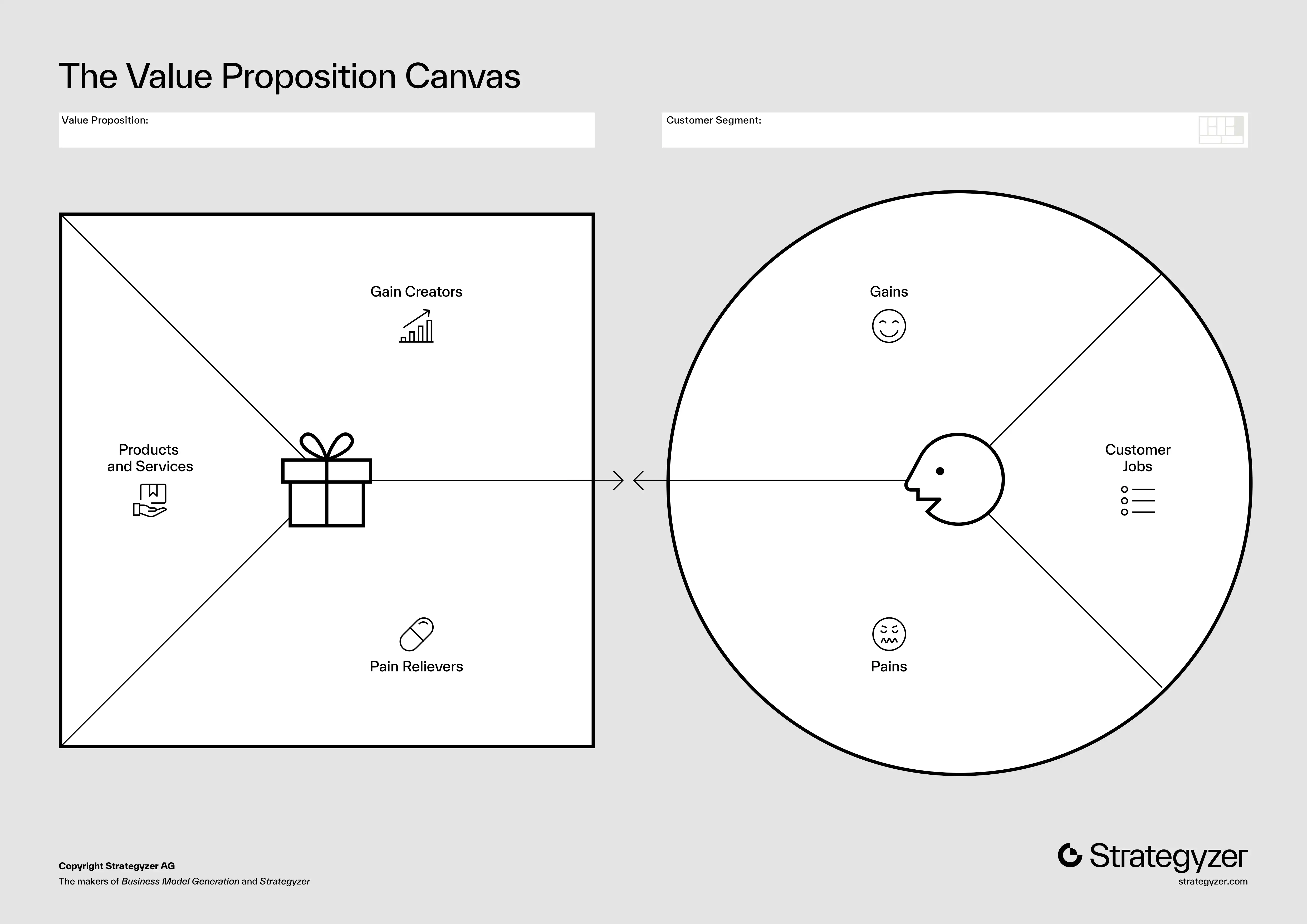
The Value Proposition Canvas consists of two primary sections: the Customer Profile and the Value Map. These components work together to help businesses understand their target customers and design products or services that effectively meet their needs. Let’s break down each of these sections in more detail.
Customer Profile
The Customer Profile helps businesses understand their target customer segments by identifying the following three key elements:
Customer Jobs
The first element of the Customer Profile is customer jobs. Customer jobs refer to the tasks, goals, or problems that customers are trying to solve in their lives. These jobs can be classified into three categories:
- Functional jobs: These are tasks or problems that are practical and tangible, such as “writing a report,” “cooking a meal,” or “buying a car.”
- Social jobs: These are the more intangible or emotional aspects of the customer’s needs. For example, a customer may want to “look stylish” or “feel confident” while purchasing a new wardrobe.
- Personal/Emotional jobs: These relate to the feelings or emotional outcomes that customers want to achieve, such as “reduce stress” or “feel safe.”
Understanding customer jobs is essential because they form the foundation for the rest of the value proposition. If a business doesn’t fully grasp the jobs that customers are trying to accomplish, it cannot build a product or service that effectively meets their needs.
Customer Pains
The second component of the Customer Profile is customer pains. Customer pains are the obstacles, challenges, or frustrations that customers face when trying to complete their jobs. These pains can include:
- Functional pains: Inefficiencies, difficulties, or frustrations that prevent the customer from performing their jobs effectively, such as poor customer service, a complicated interface, or a lack of needed features.
- Emotional pains: The negative feelings or emotions that customers experience when trying to complete their jobs, such as stress, confusion, or frustration.
- Social pains: These are related to social aspects, such as peer pressure, status concerns, or the fear of making the wrong decision.
Identifying customer pains is crucial because businesses can address these pain points directly with their value propositions, offering solutions to alleviate frustration and make customers’ lives easier.
Customer Gains
The third component of the Customer Profile is customer gains. Customer gains refer to the positive outcomes or benefits that customers want to achieve from performing their jobs. These could be:
- Functional gains: Improvements in performance, ease of use, or quality.
- Emotional gains: Positive feelings or experiences that customers gain from using a product, such as feeling happy, empowered, or satisfied.
- Social gains: These can include gaining prestige, recognition, or a sense of belonging.
Understanding the gains that customers expect or desire from completing their jobs allows businesses to create value propositions that not only meet customer needs but also exceed their expectations.
Value Map
The Value Map is the second section of the Value Proposition Canvas and focuses on how the business’s products or services can address the needs and desires identified in the Customer Profile. The Value Map is broken down into three components:
Products and Services
The products and services section outlines the offerings that the business provides to solve the customer’s jobs. These can be physical products, services, software, or features that help customers achieve their desired outcomes. The goal is to match the products and services to the jobs identified in the Customer Profile.
Pain Relievers
Pain relievers are the ways in which the company’s products or services alleviate customer pains. These can include:
- Removing obstacles that prevent customers from completing their jobs
- Improving the efficiency or ease of the customer’s tasks
- Reducing frustration, confusion, or negative emotions associated with performing the job
By focusing on pain relievers, businesses can ensure that their products address the specific problems that customers face.
Gain Creators
Gain creators describe the ways in which the company’s offerings create positive outcomes for customers. These could include:
- Providing additional features or benefits that enhance the customer’s experience
- Creating emotional satisfaction or a sense of achievement
- Offering solutions that improve the customer’s social standing or sense of belonging
Gain creators help businesses exceed customer expectations by offering more than just a solution to a problem—they add extra value that enhances the customer’s life.
Connecting the Customer Profile and the Value Map
The ultimate goal of the Value Proposition Canvas is to align the Customer Profile and the Value Map. By ensuring that the customer jobs, pains, and gains are directly addressed by the products, pain relievers, and gain creators, businesses can create a compelling value proposition that is customer-centric and relevant.
The canvas forces companies to think critically about their customer segments, the specific needs of these segments, and how their products can meet these needs in a way that is distinct and valuable. By making this connection clear, businesses can design products and services that resonate with customers and build long-term loyalty.
Case Study - Health and Fitness Apps
Let’s consider an example to see how the Value Proposition Canvas works in practice. Imagine a company is developing a health and fitness app that helps users track their exercise routines, diet, and overall health.
Customer Profile
- Customer Jobs: Users are looking to maintain a healthy lifestyle, lose weight, improve their fitness, and track their progress.
- Customer Pains: Users struggle with staying motivated, not having enough time to work out, and being unsure of which exercises or meals are best for their health goals.
- Customer Gains: Users want to see tangible results, feel more confident in their appearance, and enjoy a sense of accomplishment as they reach fitness milestones.
Value Map
- Products and Services: The health and fitness app offers personalized workout plans, a calorie tracker, progress monitoring, and a community for motivation.
- Pain Relievers: The app provides easy-to-follow workout routines, customizable plans based on available time, and nutritional guides to help users stay on track.
- Gain Creators: The app gives users real-time feedback on their progress, allows them to set and celebrate goals, and connects them with a community of like-minded individuals for motivation.
By using the Value Proposition Canvas, the company can ensure that the app addresses the customers’ needs effectively, from providing solutions to their pain points (e.g., lack of time, motivation) to delivering the benefits they seek (e.g., visible results, community support).
Written by

Mithun Sridharan
Founder, LinkPress
Mithun is a strategist, advisor, educator, and speaker focused on helping leaders make better decisions in environments shaped by change, complexity, and emerging technology. His work brings together leadership, management consulting, digital transformation, and artificial intelligence in a way that is practical, grounded, and commercially relevant.
Related Posts
Five Product Levels Framework
Kotler's Five Product Levels Framework highlights five ways to add value to a product or service
Mithun Sridharan- Innovation
- Frameworks
- Models
SAVE Framework
The SAVE (Solution, Access, Value, and Education) framework helps businesses better address customer needs and expectations
Mithun Sridharan- Innovation
- Insights
- Frameworks
- Models
Three Circles Framework
The Three Circles Framework helps develop effective value propositions and positioning strategies
Mithun Sridharan- Innovation
- Leadership
- Frameworks
- Models